
MUMBAI: A renewed conversation around AI sovereignty is gathering momentum after recent restrictions on access to some of Anthropic’s most advanced artificial intelligence models reignited concerns about dependence on foreign-controlled technology platforms and infrastructure.
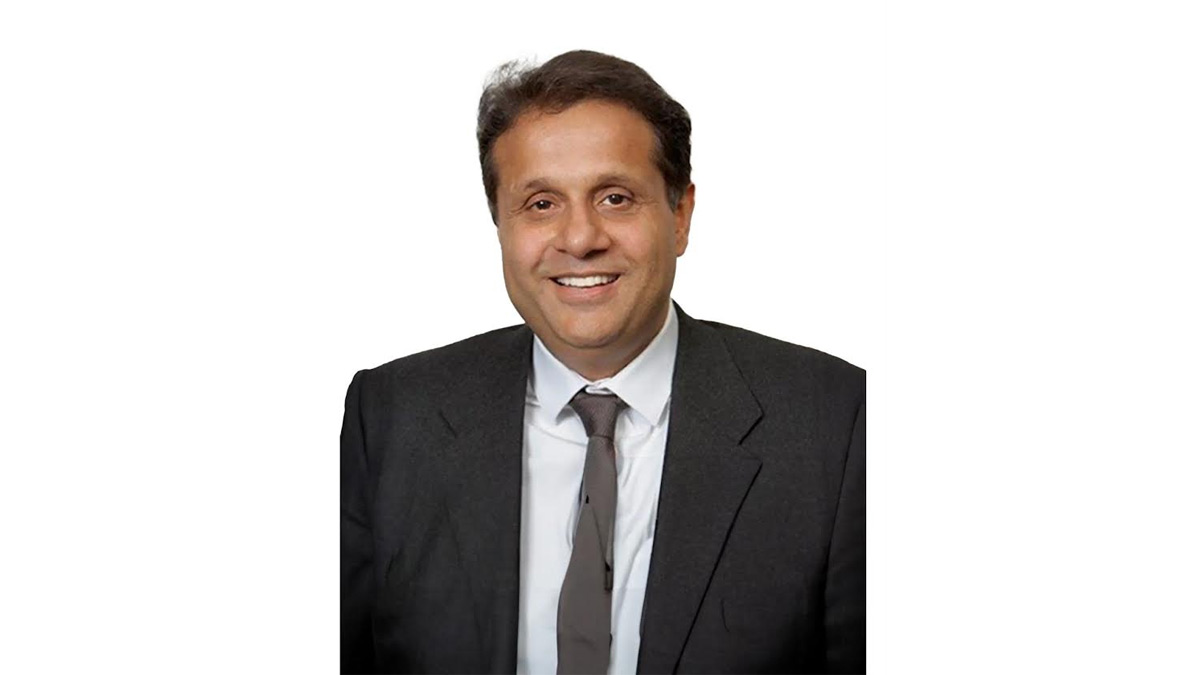
Adding his voice to the debate, Kishore Lulla, founder and executive chairman of Eros Innovation, said the limitations placed on international access to Anthropic’s Fable 5 and Mythos 5 models should act as a warning for nations that rely heavily on overseas AI ecosystems.
The remarks follow Anthropic’s decision to suspend access to the two frontier AI systems after a directive from the U.S. government reportedly subjected the models to tighter export-control requirements on national security grounds. While the company complied with the order, it has publicly indicated that it does not necessarily share the government’s assessment of the risks involved.
For Lulla, the development underscores a broader strategic vulnerability: the risks that emerge when critical technological capabilities depend on infrastructure, platforms, and models governed outside a country’s borders.
“I have said this before and I will say it again, this was inevitable. When a nation’s cultural expression depends on foreign platforms, foreign models and foreign infrastructure, those platforms will always make decisions that reflect their own priorities, not ours,” said Kishore Lulla.
“Claude restricting access to Indian users is not a surprise. It is a consequence of a structural dependency that India must urgently address.”
Pointing to Eros Innovation’s efforts in artificial intelligence, Lulla highlighted the company’s Eros LCM family of models as part of a larger push toward sovereign AI development. According to him, the initiative has received recognition from India’s Ministry of Electronics and Information Technology and is anchored at Indian Institute of Technology Madras, with training conducted on datasets owned and managed within India.
“This is precisely why we built the Eros LCM family as a sovereign AI initiative. India cannot afford to be a consumer of AI built elsewhere. Every time a foreign platform restricts access, changes terms, or simply decides that India is not a priority, we are reminded of what is at stake,” he said.
The controversy has fueled wider discussions throughout the global technology community about who controls access to advanced AI capabilities and how nations can safeguard their technological independence. As governments increasingly view frontier AI through the lens of national security and strategic competition, access to leading-edge models may become influenced as much by geopolitics as by commercial considerations.
Lulla argues that India and other emerging technology powers must accelerate investments in indigenous AI development, including foundational models, locally governed datasets, and domestic computing infrastructure. In his view, these elements are essential not only for innovation but also for long-term resilience.
“Sovereign AI is not a policy ambition. It is a national necessity. India has the data, the talent, the institutions and the government commitment to build it. The question is urgency. I hope this moment accelerates it.”
The discussion comes at a pivotal moment for India’s AI sector, with policymakers, startups, research institutions, and technology companies racing to strengthen domestic capabilities amid intensifying global competition. While international AI platforms continue to play a central role in driving innovation and adoption, the Anthropic episode has highlighted how rapidly access to critical technologies can shift when national interests and regulatory priorities come into play.
For proponents of sovereign AI, the incident serves as a powerful reminder that technological self-reliance is evolving from an economic aspiration into a strategic necessity. As AI becomes increasingly embedded in commerce, culture, governance, and industry, the ability to build and control foundational technologies may prove just as important as the ability to use them.